Our approach
Holistic, ethical, evidence-based
We don't offer a quick fix. We offer a structured, honest approach to recovery that treats the whole person — body, mind, community, and meaning.
Our framework
Five pillars of recovery
We work across five dimensions — biological, psychological, social, spiritual, and physical — because addiction touches every part of a person's life.
Biological
Addiction is a brain-based condition, not a moral failing. We take the biological dimension seriously: understanding how substances change the brain, managing withdrawal safely, and supporting the body's recovery through nutrition, movement, and rest. We can't support people in active detox — that requires medical supervision. We work with you once you're past the acute phase and ready to build a sustainable recovery.
Psychological
The therapy we offer is evidence-based and integrative. Chris draws on Motivational Interviewing to meet people where they are, Mindfulness-Based Relapse Prevention to build resilience against triggers, and an integrative framework combining CBT, person-centred, and Gestalt modalities. Sessions happen both individually and in groups — because hearing your own experience reflected in someone else's words can be profoundly healing.
Social — community is medicine
This is the heart of Esperanza. Recovery happens in relationship: with other people in the group, with the local community in Essaouira, with shared meals, and with the simple act of being known. Group therapy, cooking together, walking the medina, sharing music — these are not "activities." They are the medicine. We help people build a non-using peer network that lasts beyond the retreat.
Spiritual and meaning-making
By "spiritual" we don't mean religious — we mean finding a renewed sense of purpose, vocation, and self-image. Addiction often strips away meaning. Creative expression — music, writing, art — helps you rediscover what matters to you. Reflection, quiet time, and the beauty of Essaouira's landscape all play a part in rebuilding a life worth living sober.
Physical recovery
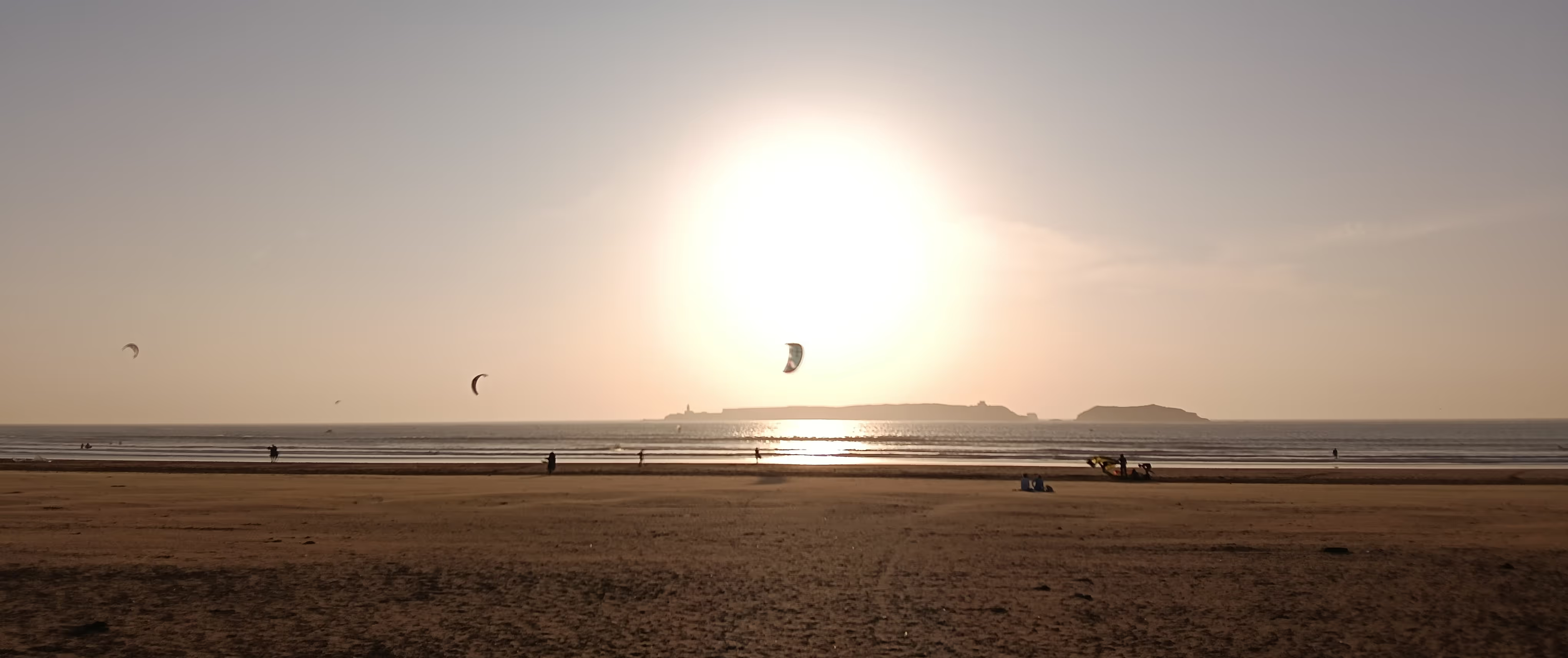
The body is part of the work. Movement, outdoor activity and time in nature are central to how we support recovery. Through surfing and watersports on Essaouira's Atlantic coast, horse riding on the beach, and trekking in the Atlas mountains or the local countryside, we help you reconnect with their physical selves — a crucial piece of the recovery puzzle often overlooked in clinical settings.
Gardening therapy is planned for future retreats.
Ethics and economics
A network, not a clinic
Esperanza is built on a different model. We believe that how a recovery programme is structured economically matters as much as the therapy it delivers.
We're inspired by Kate Raworth's Doughnut Economics — meeting human needs within planetary boundaries. In practice, this means:
No international hotel chains. We use local guesthouses and home stays. The money clients pay stays in Essaouira and supports the families who live here.
A network of independent local professionals. Esperanza isn't a single organisation employing staff. We're a collective of therapists, musicians, artists, yoga teachers, cooks, hammam practitioners, trekking guides, and healthcare workers — each earning a fair share of what clients pay.
Reinvestment for Moroccans. We use a portion of profit from international clients to provide lower-cost treatment for Moroccans who struggle to access addiction care. Recovery shouldn't be a privilege reserved for those who can afford to travel.
Part of the community, not above it. We work with existing community groups, faith organisations, farms, and permaculture projects. We're guests in Essaouira, and we behave like it.
We donate 5% of all profits to partner charities.
Creative therapies
Expression as a pathway to recovery
These aren't activities to fill the day. They're therapeutic tools we've chosen to help you explore embodiment, creative expression, and connection.
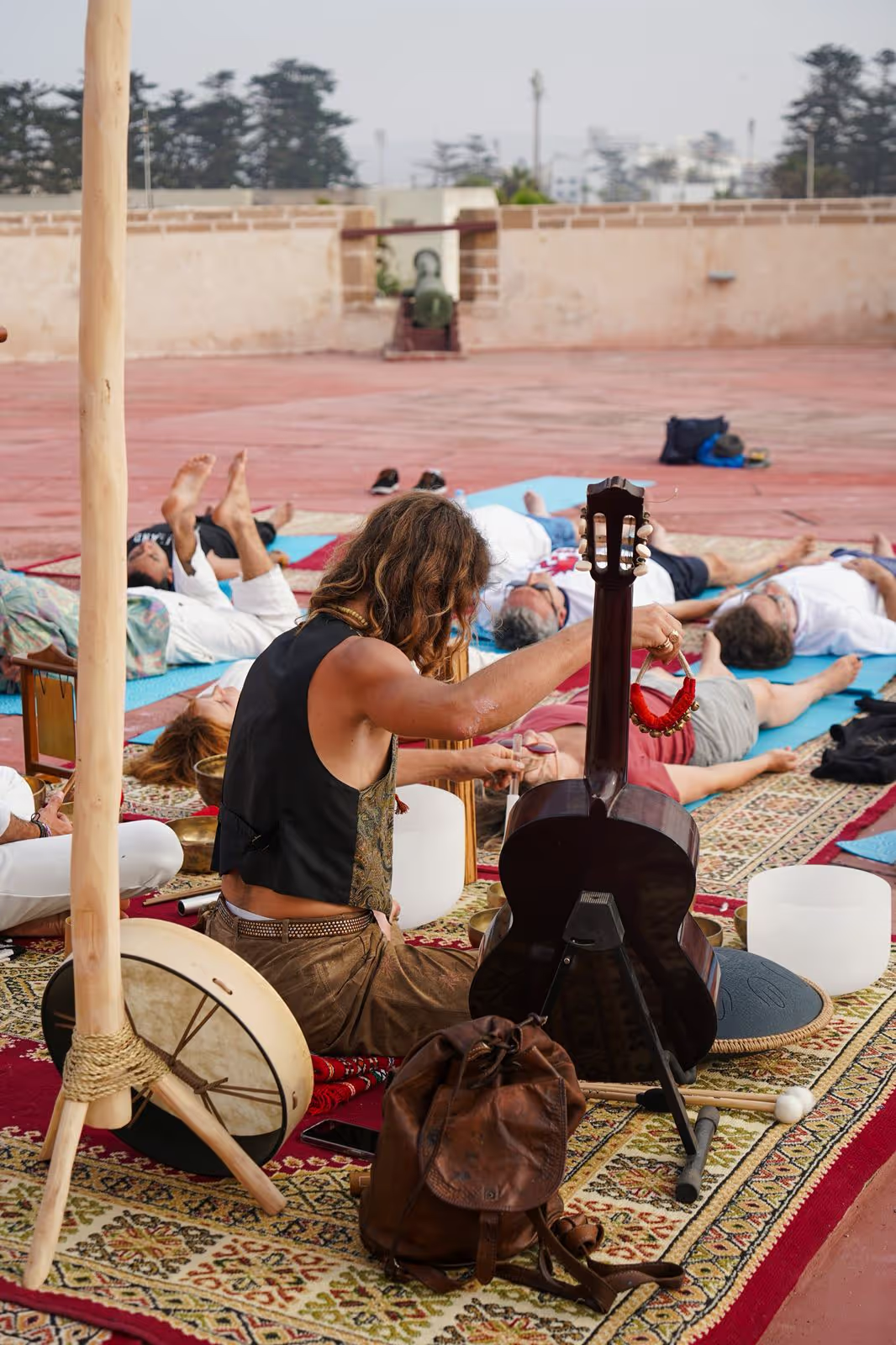
Music therapy is the centrepiece of our music & creative retreat — working with local musicians to explore rhythm, voice, and listening as tools for emotional expression and group connection.
Art and writing workshops with local artists give you a way to express what words alone can't. We use drawing, painting, and journaling therapeutically, not as entertainment.
Cooking with local chefs reconnects you with the nourishing, communal act of preparing and sharing food — something addiction often disrupts.
Yoga and meditation support embodiment and mindfulness, complementing the MBRP approach used in formal therapy sessions.
Hammam visits, trekking, horse and camel rides, surf and kite-surf — physical experiences in the Essaouira landscape that help you reconnect with your body and with the natural world.
Our network
Our collaborators
Our retreats are shaped by a network of independent professionals who bring their craft to the programme — yoga and sound healers, music therapists, surf therapists, chefs, artists, guides.
Alison — Folklore Collectif
Our food is prepared by Alison, who will also lead a cookery class during the retreat.
Find her work at @folklorecollectif on Instagram.
Morgan — Moga Yoga Studio
Yoga, meditation and sound baths are led by Morgan at Moga Yoga Studio.
See it in practice
Our retreats — trekking, music & creative, surf, and writing — are where Esperanza's approach comes to life in Essaouira.
See our retreats